
Articles
Written by Kawin Jiaranaisakul


Every July, nature lovers around the world turn off their worries and turn on a light, just to see who shows up. This year, National Moth Week ran from July 18 to 26, and here at Khaolak Merlin Resort, we joined in the fun right in our own garden.

National Moth Week is a global citizen science event that started in New Jersey, USA, back in 2012. It has since grown into a celebration held in more than 80 countries, including Thailand. The idea is simple. Moths are everywhere, they come in an incredible range of shapes and colors, and most species are still poorly documented by science. For one week each year, anyone with a light and a bit of curiosity can help change that.
All it takes is a porch light, a white sheet, or even a bright bathroom window left open at night. Moths are drawn to light, and once they land, you can take a photo and upload it to an app like iNaturalist. Scientists then use these photos to study where different species live and how their populations are changing over time.

Moths often live in the shadow of their more famous cousins, the butterflies, but they play just as important a role in nature. Scientists have identified more than 150,000 moth species so far, and some believe the true number could be over 500,000, making moths one of the most diverse groups of animals on the planet.
At night, moths take over pollination duties from bees and butterflies, visiting flowers that bloom after dark. Their caterpillars are also a vital food source for birds, bats, and countless other animals. Without moths, many forest food chains would look very different.
Khao Lak sits between rainforest hills and the Andaman Sea, which makes it a wonderful place for moth watching. During Moth Week, our team set up a simple light station near the resort garden after dinner and waited to see who would arrive.
The results did not disappoint. Over a few nights, we recorded hawk moths with wingspans as wide as a hand, delicate lacy patterned geometer moths, and a scattering of tiny micro moths whose scales shimmer like tiny jewels under torchlight. Guests staying with us during the week were invited to stop by, borrow a torch, and take a closer look. For many, it was their first time seeing a moth up close instead of swatting one away.
Some of our favorite sightings were shared with our resident biologist team, who helped identify species and explained a little about each one’s life cycle, from egg to caterpillar to the moth itself.

Every photo taken during Moth Week becomes part of a much larger picture. Because the event happens at the same time each year, researchers can compare data across seasons and locations, spotting patterns that would be impossible to see from a single backyard alone. A moth photographed in our garden in Khao Lak becomes one small data point in a worldwide effort to understand these overlooked insects.
National Moth Week may only run for nine nights each July, but mothing itself needs no calendar. Any warm evening in Khao Lak is a good night to leave a light on and see who visits. Next time you are staying with us, ask our nature team about an evening moth walk. You might be surprised by what is fluttering around after dark, right outside your room.
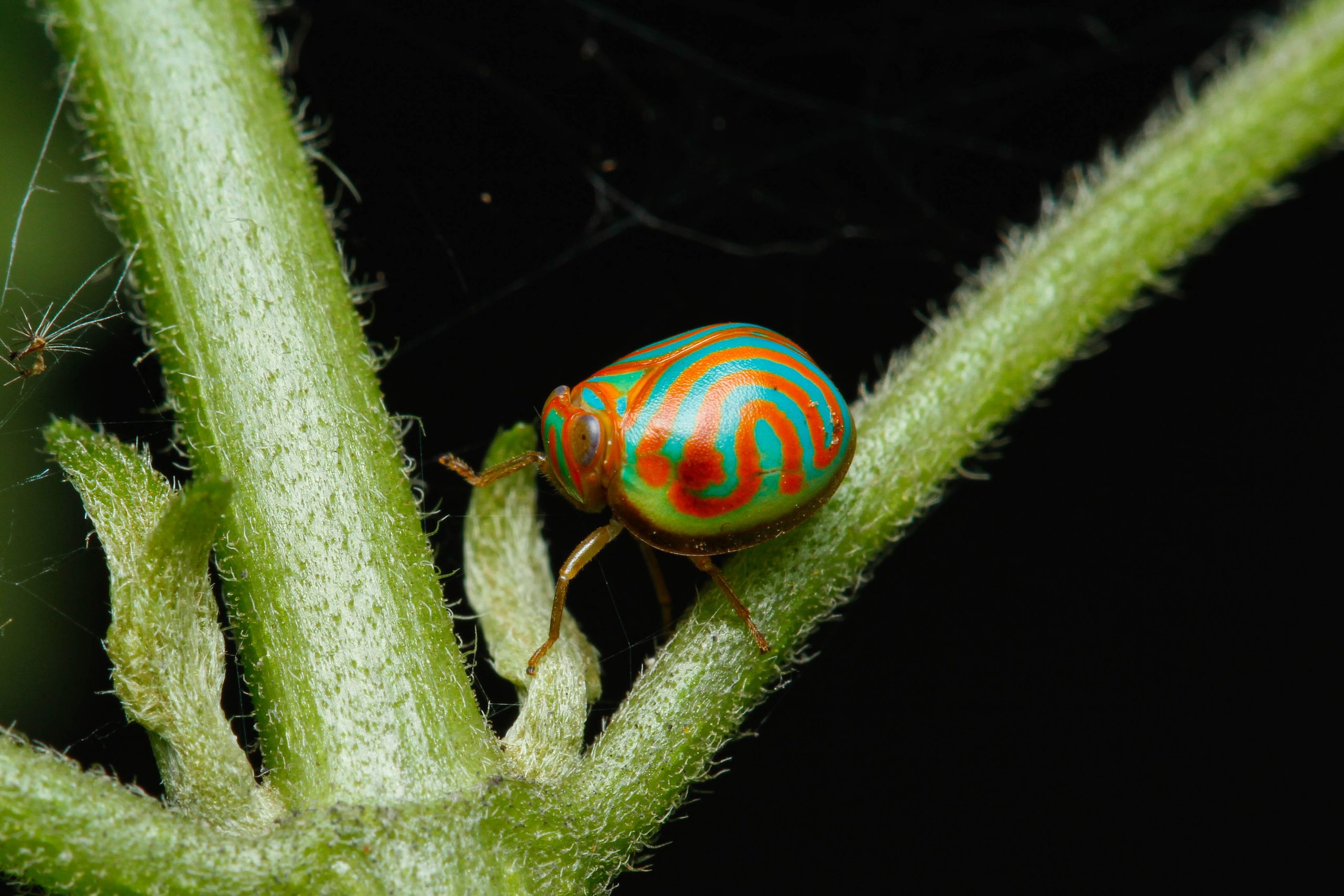
Smaller than a grain of rice—meet Bindusen’s Candy Planthopper (Hemisphaerius binduseni), a living jewel with ancient pottery-inspired patterns found only in Thailand. Discover how to spot this tiny marvel hiding right beside our resort footpaths.
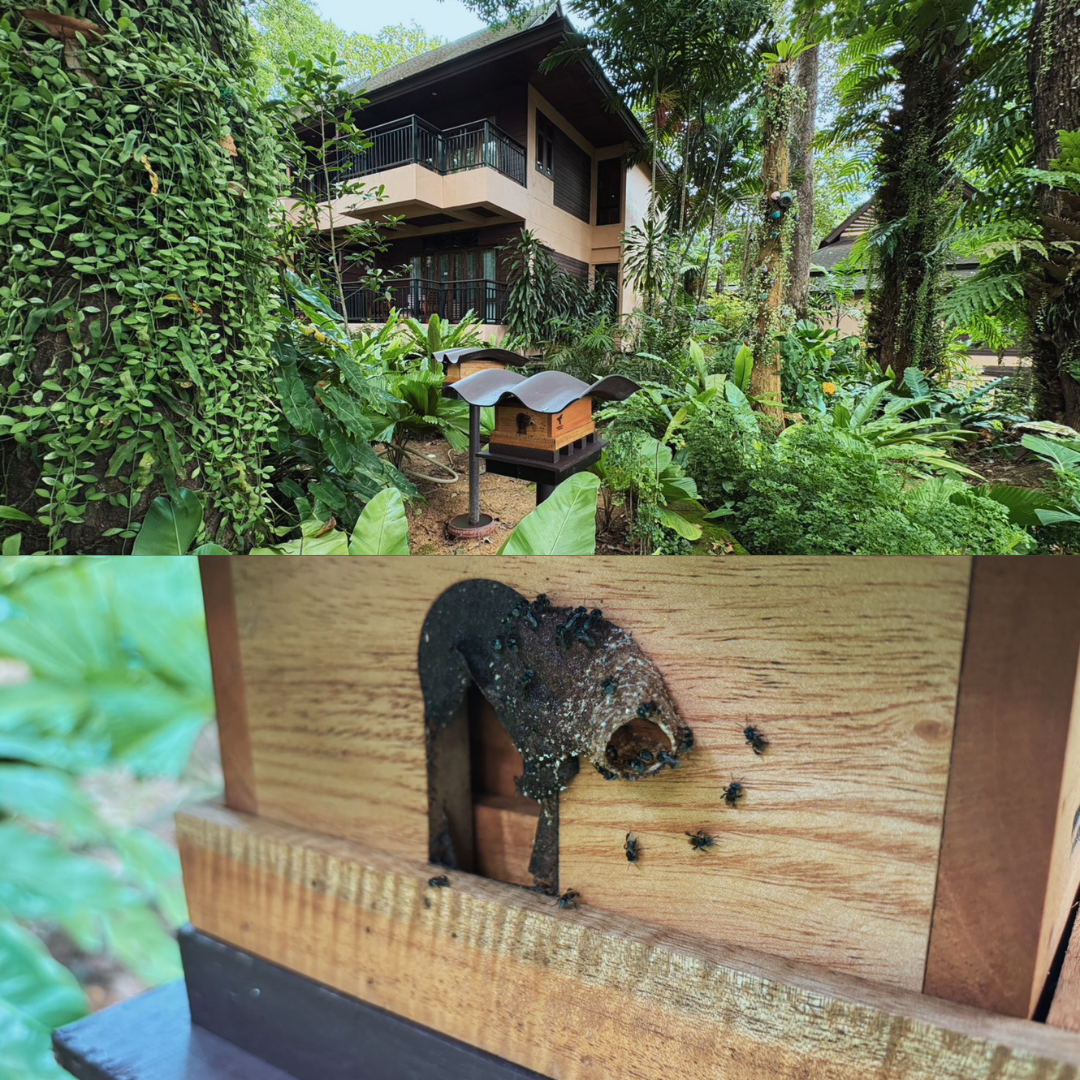
Nature’s Stingless Wonder: Meet Tetragonula pagdeni, the tiny shimmering bee that naturally cannot sting and builds unique waxy hives. Learn how these gentle pollinators live and where to find our three observation boxes around the resort grounds.

Meet the Sea Almond, a coastal giant of extraordinary evolutionary design. From its wind-resistant canopy to bi-annual leaf color changes, this everyday tree is a master of survival. Discover why its leaves hold a secret chemical weapon that aquarium hobbyists love. Dive into its fascinating biology today!

May doesn’t announce itself loudly, but if you pay attention, it quietly holds some of the most urgent reminders on the calendar — from the hum of pollinators keeping our food systems alive, to the ancient patience of turtles that have outlasted extinctions, to the unsung scientists still busy naming the living world before it disappears.

Step outside at dusk in Khao Lak and you will hear it instantly: a rising, pulsing chorus pouring out of the trees. That sound belongs to the cicada, one of southern Thailand’s most fascinating and overlooked creatures. From the garden of Khaolak Merlin Resort to the deep rainforests of Phang Nga, these remarkable insects have been singing the same songs for millions of years. But there is far more to them than noise.


