
Articles
Written by Kawin Jiaranaisakul

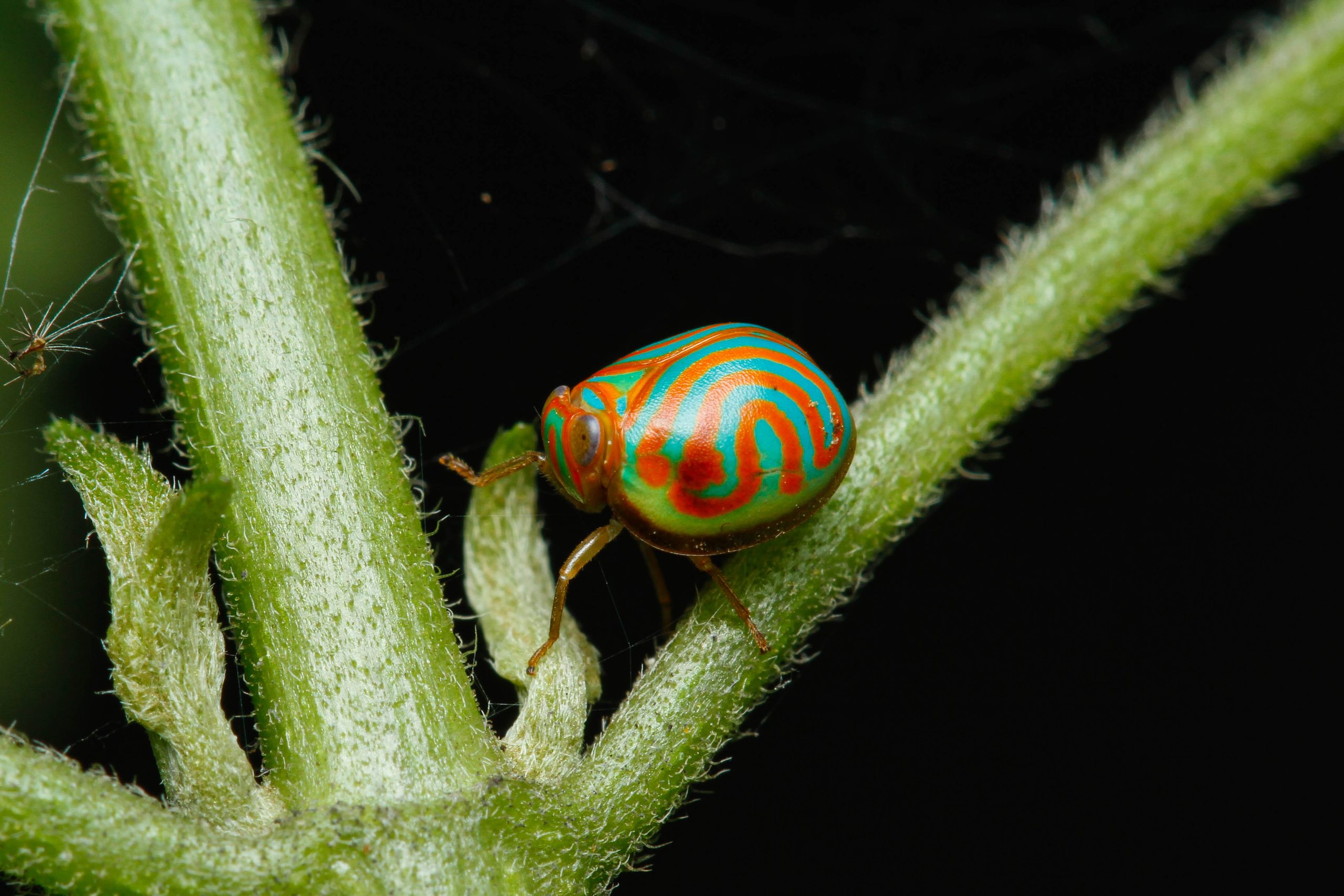
Some of the best wildlife at Khaolak Merlin Resort is not found in the treetops or out on the water. Sometimes it is sitting on a blade of grass beside the footpath, smaller than a grain of rice. This month, I want to introduce one of my favorite tiny residents, a planthopper called Hemisphaerius binduseni. I like to call it Bindusen’s candy planthopper.
Yes, it is a real animal. When I post photos of this insect, people often ask if the picture was made by AI. It was not. The colors and patterns are completely natural, and every photo I share comes from an insect I found myself.
In Thai, this insect is called เพลี้ยกระโดดลายบ้านเชียง, which means “Ban Chiang pattern planthopper.” Ban Chiang is a famous archaeological site in Udon Thani, in northeastern Thailand, known for its beautiful painted pottery thousands of years old. The bold markings on this insect’s back remind people of those ancient designs, and that is how it got its name.
Here is a fun twist. The planthopper does not actually live in Udon Thani, or anywhere in the northeast. The name comes only from the look of the pattern, not from where the insect is found. You could say the name has traveled farther than the insect has.
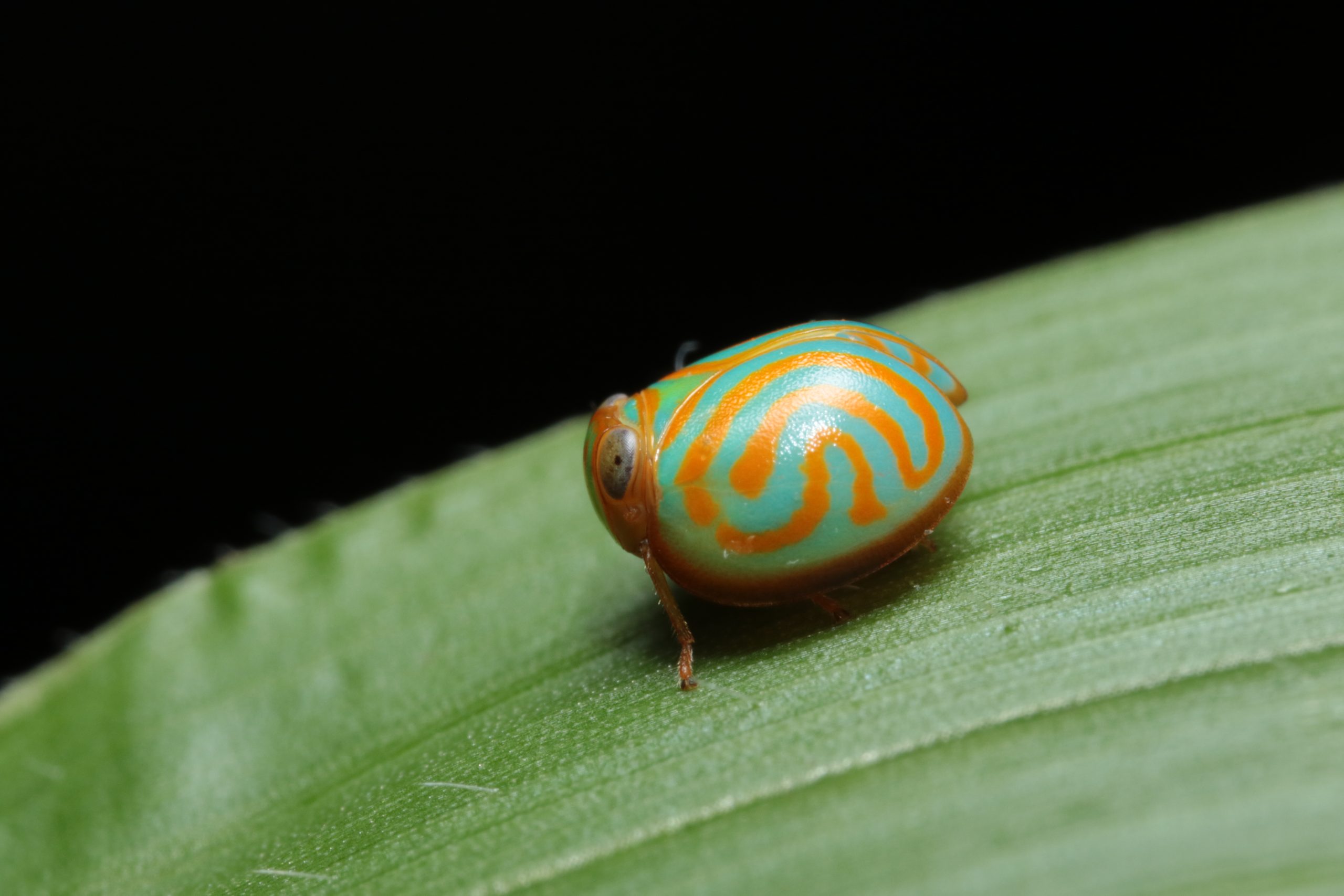
This planthopper is only 4–5 millimeters long. That is about the size of a sesame seed, so you will need patient eyes to find one. If you get too close too fast, it may flick away with a quick jump. That is how planthoppers got their name.
What makes it even more special is that it has only been found in Thailand. It lives in the central, eastern, western, and southern parts of the country. A species that exists in only one country is something worth being proud of, and worth sharing.
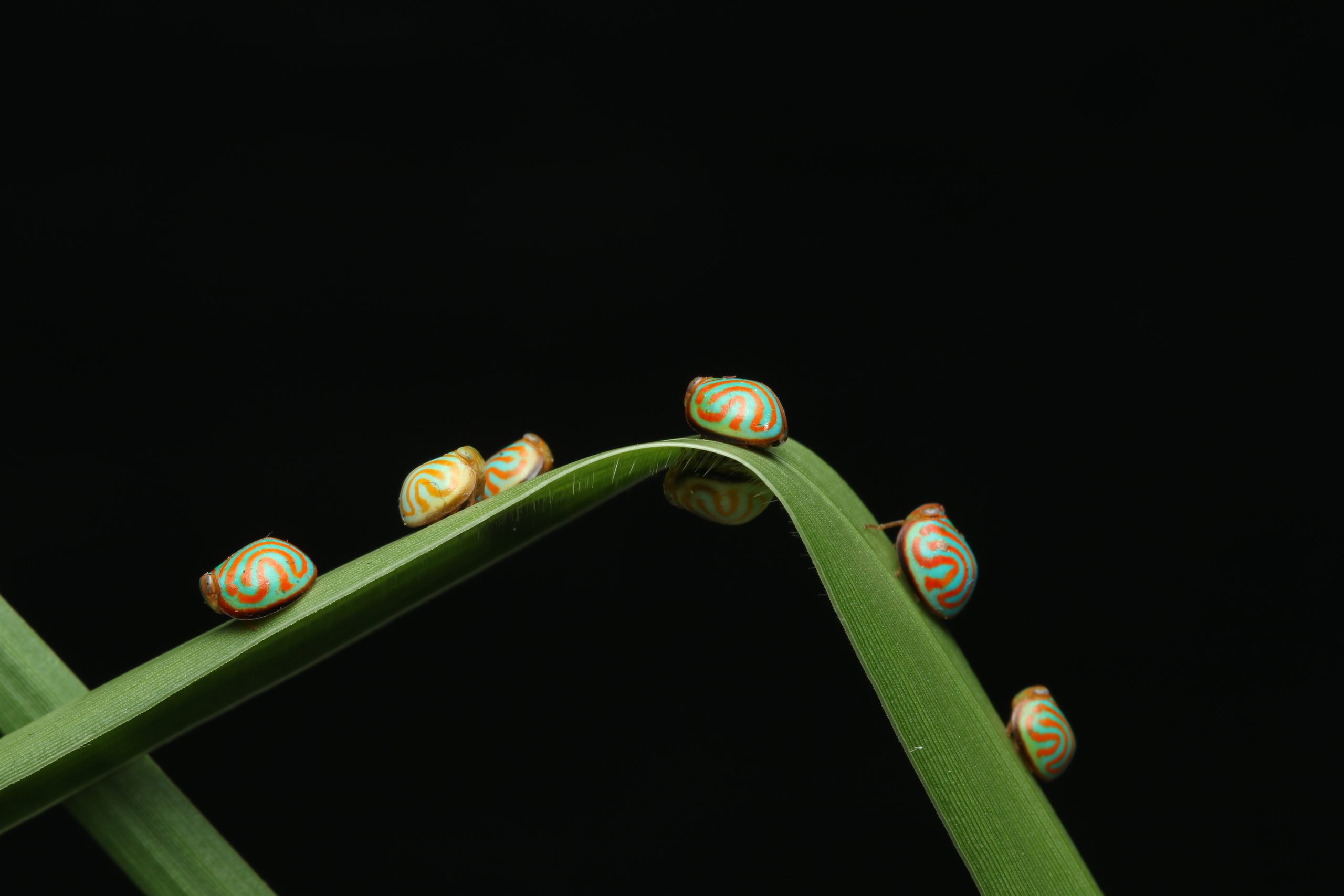
This little insect likes open, sunny places. You will not find it deep in the forest. Instead, look in grassy areas, roadsides, and the edges of paths. It feeds on hairy grasses, sucking sap from the leaves and stems. Like many planthoppers, it spends most of its life quietly sitting on its food plant.
That is good news for guests, because the habitat it likes is the same kind of place you walk through every day.
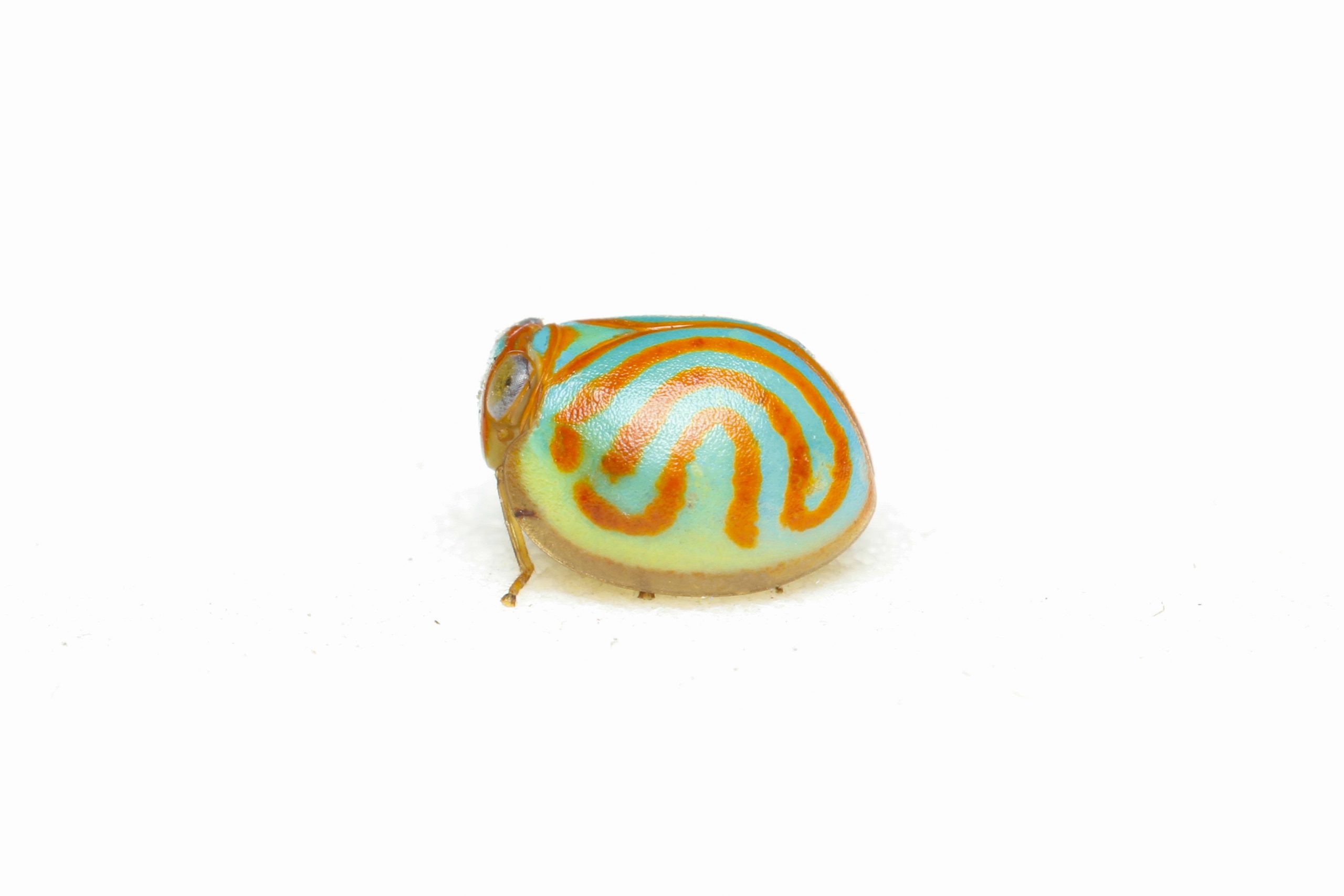
You do not need to go on a long trek. Some of the easiest places to look are right along the roads and walkways around the resort. Walk slowly and keep your eyes on the grass instead of the sky, especially where hairy grasses grow in open, sunny spots. Remember that you are searching for something about 5 millimeters long, so look closely at the leaves and stems. Your phone camera’s zoom or a small magnifying glass will help you see the pattern. If it jumps away, just be patient and look again in a moment. Early morning and late afternoon are good times, when the light is soft and the colors show up nicely.
The best part of finding a tiny insect like this is the surprise. You walk past the same patch of grass many times, then one day you stop and see a little jewel looking back at you. After that, you start to notice how much life is hiding in small places.
If you stay with us, please give it a try. Take a slow walk along the paths, bring your curiosity, and see if you can spot this colorful Thai original. If you find one, I would love to hear about it. Share your photo with our team, or stop me when you see me around the resort. I am always happy to talk insects.
Happy exploring!
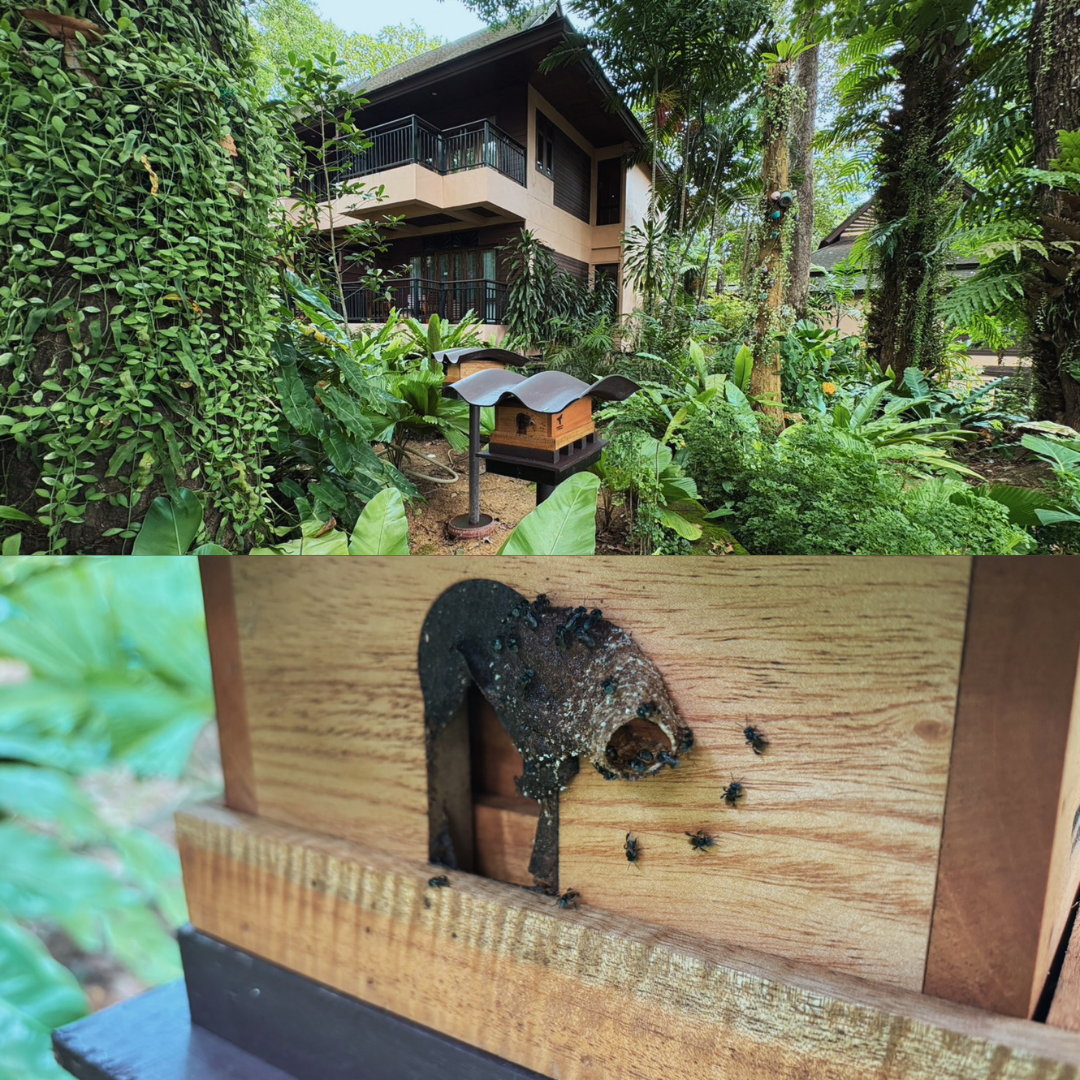
Nature’s Stingless Wonder: Meet Tetragonula pagdeni, the tiny shimmering bee that naturally cannot sting and builds unique waxy hives. Learn how these gentle pollinators live and where to find our three observation boxes around the resort grounds.


Meet the Sea Almond, a coastal giant of extraordinary evolutionary design. From its wind-resistant canopy to bi-annual leaf color changes, this everyday tree is a master of survival. Discover why its leaves hold a secret chemical weapon that aquarium hobbyists love. Dive into its fascinating biology today!

May doesn’t announce itself loudly, but if you pay attention, it quietly holds some of the most urgent reminders on the calendar — from the hum of pollinators keeping our food systems alive, to the ancient patience of turtles that have outlasted extinctions, to the unsung scientists still busy naming the living world before it disappears.

Step outside at dusk in Khao Lak and you will hear it instantly: a rising, pulsing chorus pouring out of the trees. That sound belongs to the cicada, one of southern Thailand’s most fascinating and overlooked creatures. From the garden of Khaolak Merlin Resort to the deep rainforests of Phang Nga, these remarkable insects have been singing the same songs for millions of years. But there is far more to them than noise.


