
Articles
Written by Kawin Jiaranaisakul


If you have ever walked along a Thai beach and paused under the shade of a broad-canopied tree with leaves the size of dinner plates, chances are you were standing beneath a Sea Almond. Known in Thai as หูกวาง (hoo kwang), or scientifically as Terminalia catappa, this tree is one of the most recognizable fixtures of Southeast Asian coastlines, and once you learn to identify it, you will notice it everywhere.
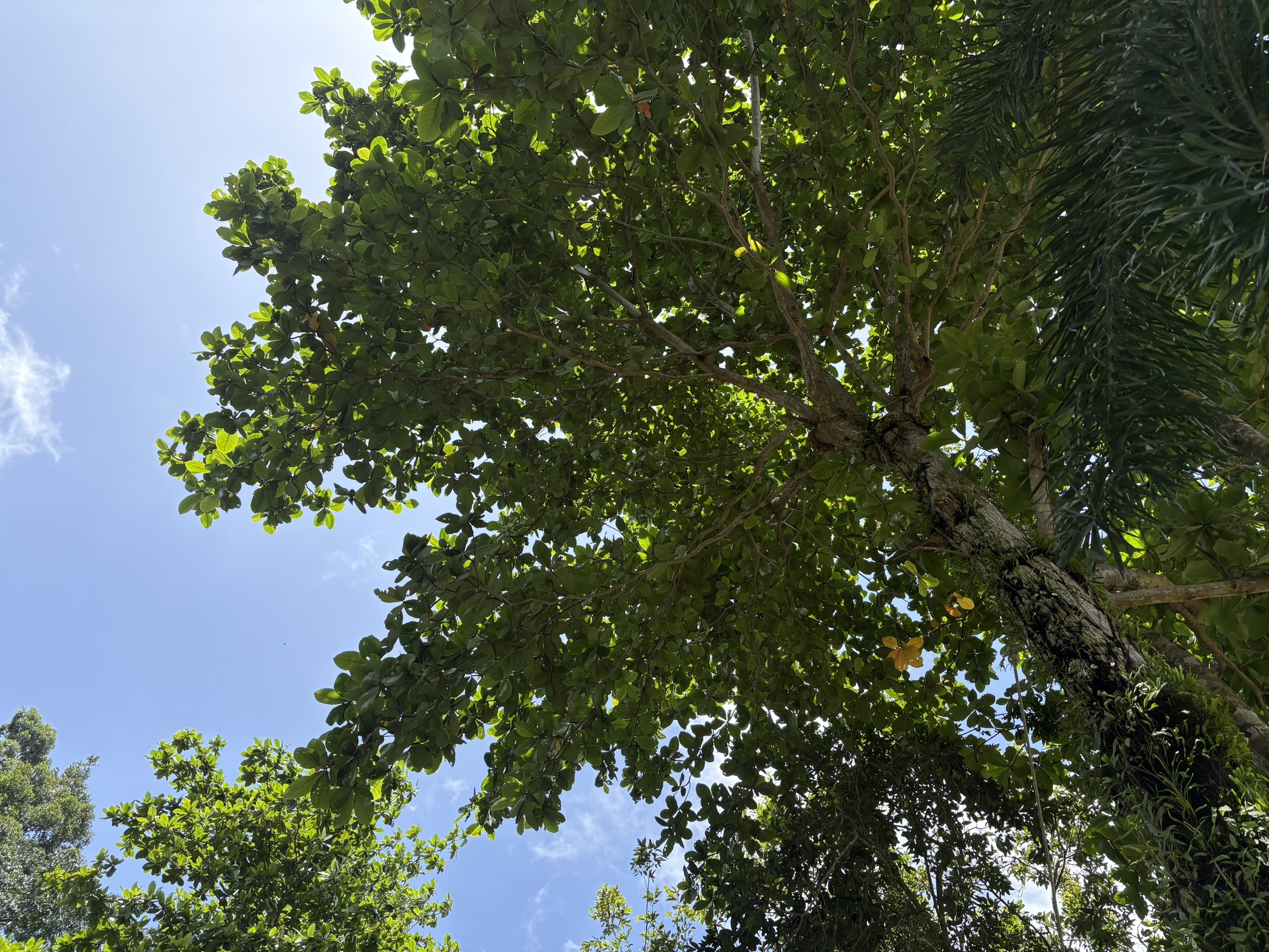
The Sea Almond is shaped by the environment it calls home. Its branches grow outward in distinct horizontal tiers, layer upon layer, like a series of flat shelves stacked toward the sky. This umbrella-like form, which is the reason one of its English common names is simply “Umbrella Tree”, is not just visually striking. It also lets the tree capture as much sunlight as possible in the open, breezy conditions of coastal habitats. Mature trees can reach 15 to 20 meters in height, and old specimens develop dramatic buttress roots that flare out from the base of the trunk like natural architecture. The tree thrives in sandy, well-drained soil close to the sea, tolerating salt spray and strong winds that would stress most other species. It is genuinely a child of the shoreline.
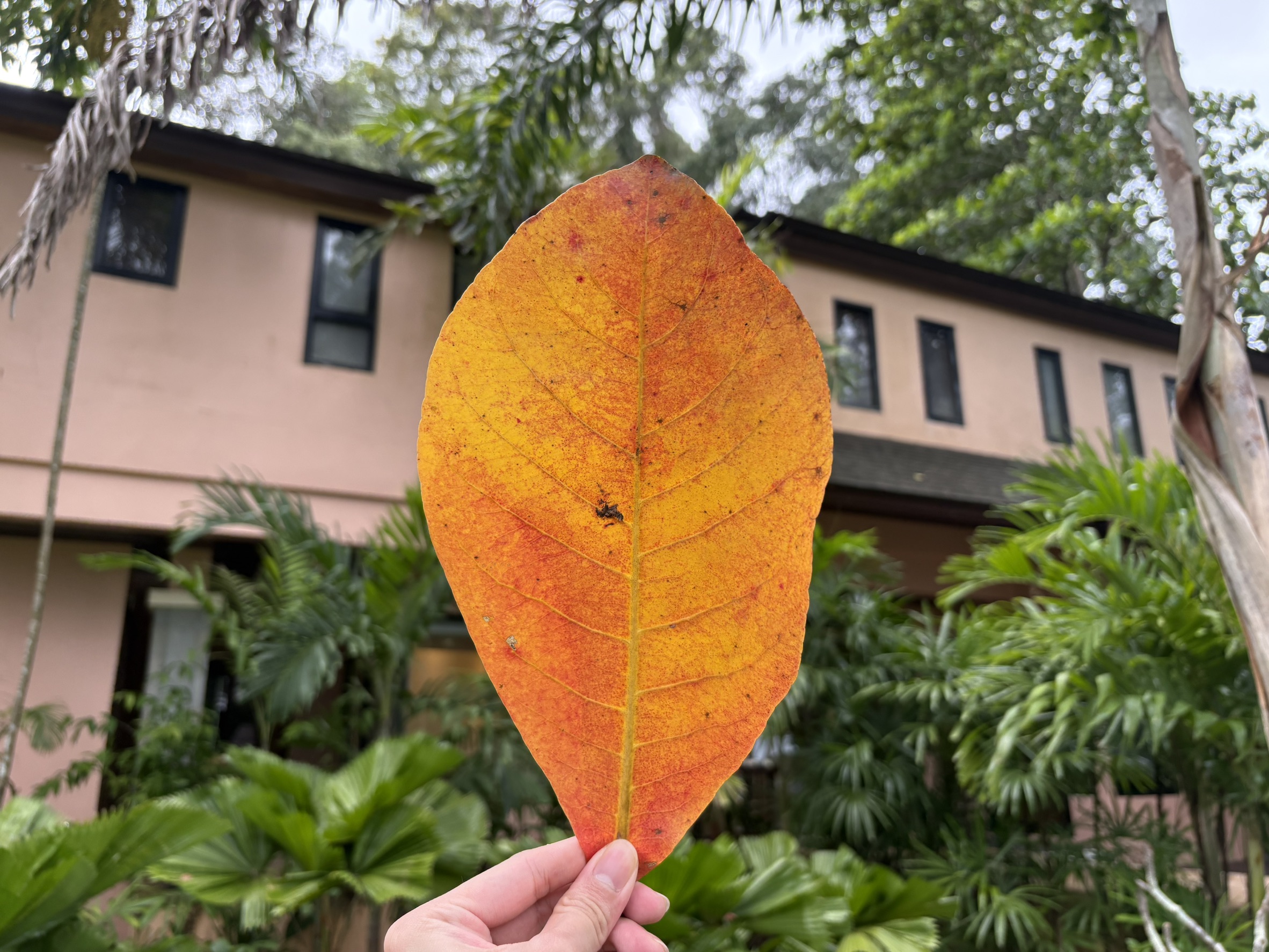
One of the most striking things about the Sea Almond is its foliage. Unlike most tropical trees, which hold their leaves year-round with little visible change, the Sea Almond is semi-deciduous, meaning it sheds its leaves twice a year. Before they fall, the large, oval leaves turn from deep green to brilliant shades of yellow, orange, and red.For a brief window, a Sea Almond in full leaf-change looks more like something you would expect to see in a Japanese autumn garden than on a Thai beach.
This happens around January to February and again around July to August. If the timing aligns with your visit, it is genuinely worth stopping to look.
The fruits of the Sea Almond are oval, slightly flattened, and about the size of a small plum, turning from green to yellow or reddish-purple when ripe. Inside the fibrous husk is a hard shell, and inside that shell sits a small edible kernel with a mild, nutty flavor, which is where the “almond” in the name comes from.
What is clever about these fruits is how they are designed to travel. The outer husk is buoyant and resistant to seawater, so when the fruit drops onto a beach and gets carried out by the tide, it can drift for months across open ocean and still germinate when it finally washes ashore somewhere new. This is how Sea Almond have colonized coastlines all the way from India to northern
Australia without any human help. Fruit bats also play a role, eating the pulp and dispersing the seeds further inland.
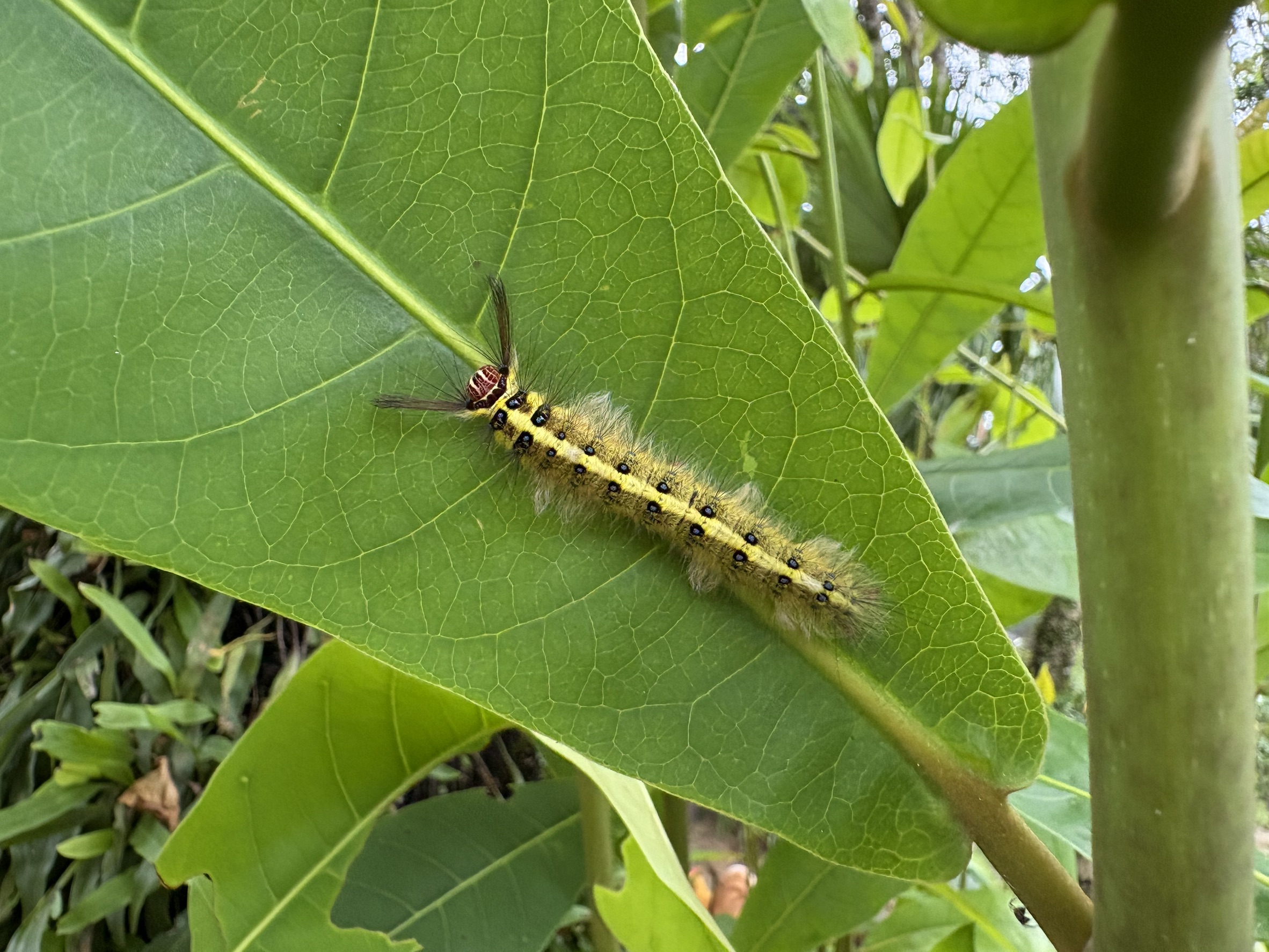
Beyond its own biology, the Sea Almond supports a surprisingly rich cast of wildlife. Its flowers, though small and without much scent, attract insects. Its fruit feeds bats, birds, and small mammals. And perhaps most famously among aquarium keepers, the fallen dry leaves release tannins and other compounds into water that have natural antibacterial and antifungal properties. This has made dried Sea Almond leaves a staple in the care of fighting fish and other tropical fish species, mimicking the soft, acidic water of their wild habitats.
It is easy to walk past a Sea Almond without giving it a second thought. It lines roadsides, shades temple grounds, and drops its leaves quietly on beach paths. But look a little closer and you see a tree that has spent thousands of years perfecting a strategy for living at the edge of the land and sea, adapting and spreading across an entire ocean basin, one fruit at a time.
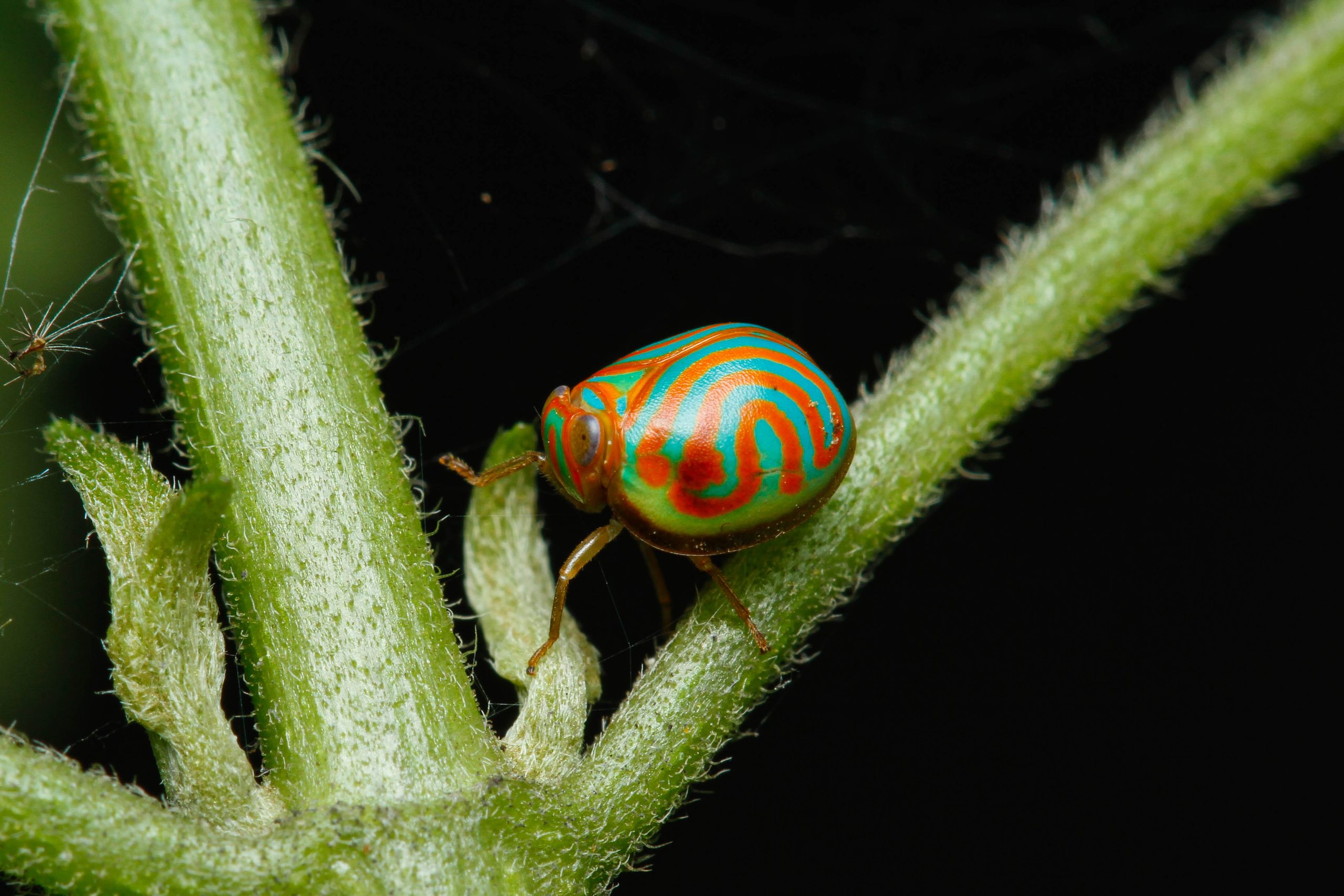
Smaller than a grain of rice—meet Bindusen’s Candy Planthopper (Hemisphaerius binduseni), a living jewel with ancient pottery-inspired patterns found only in Thailand. Discover how to spot this tiny marvel hiding right beside our resort footpaths.
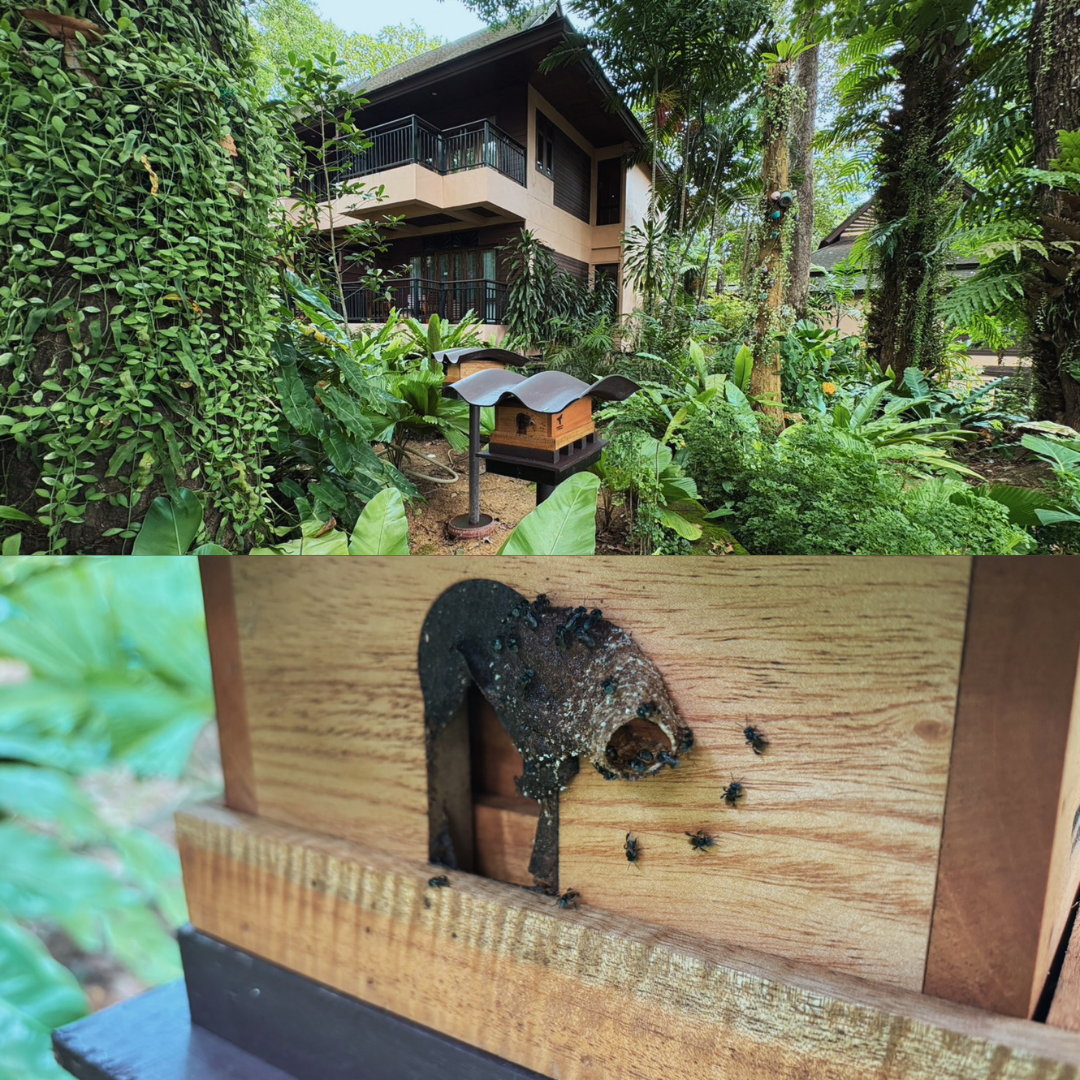
Nature’s Stingless Wonder: Meet Tetragonula pagdeni, the tiny shimmering bee that naturally cannot sting and builds unique waxy hives. Learn how these gentle pollinators live and where to find our three observation boxes around the resort grounds.


May doesn’t announce itself loudly, but if you pay attention, it quietly holds some of the most urgent reminders on the calendar — from the hum of pollinators keeping our food systems alive, to the ancient patience of turtles that have outlasted extinctions, to the unsung scientists still busy naming the living world before it disappears.

Step outside at dusk in Khao Lak and you will hear it instantly: a rising, pulsing chorus pouring out of the trees. That sound belongs to the cicada, one of southern Thailand’s most fascinating and overlooked creatures. From the garden of Khaolak Merlin Resort to the deep rainforests of Phang Nga, these remarkable insects have been singing the same songs for millions of years. But there is far more to them than noise.


